


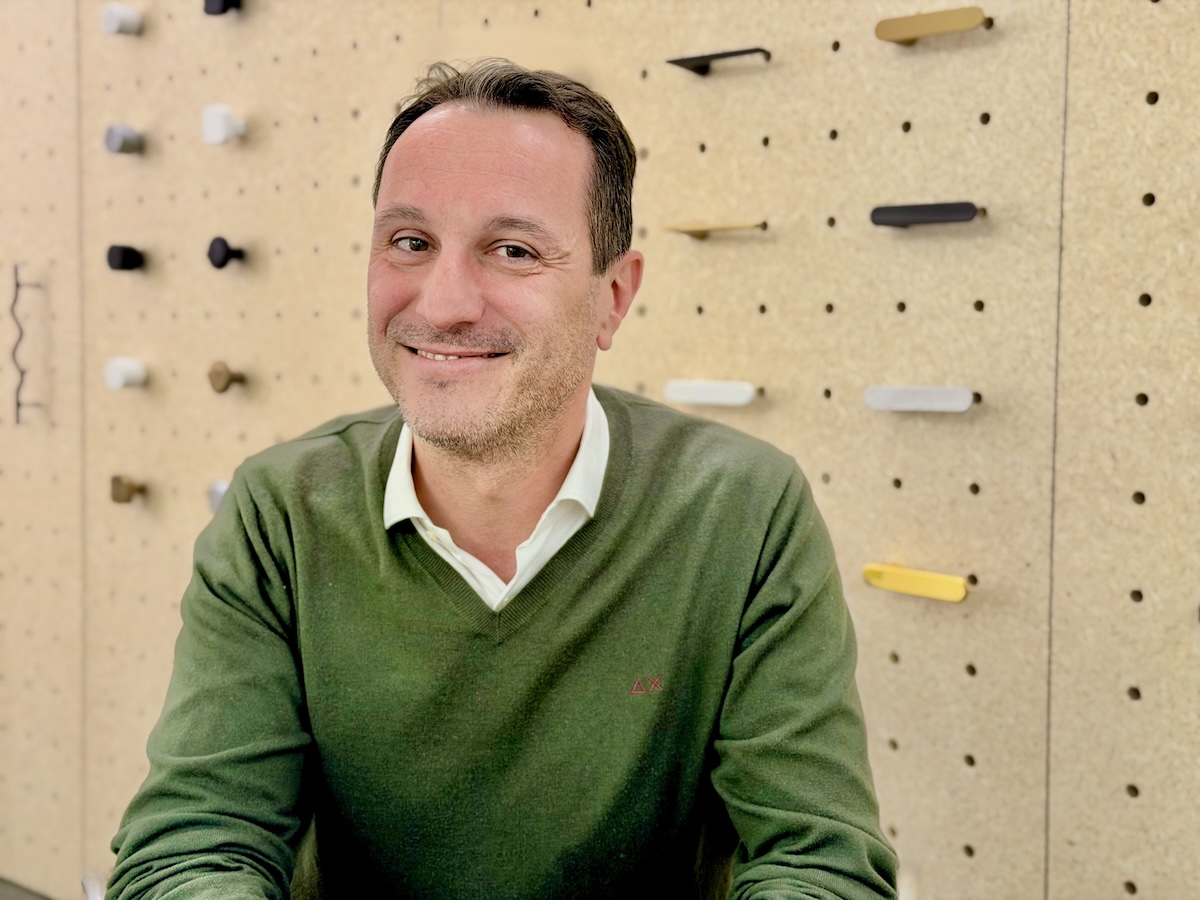
On a sunny spring morning in Milan, I sat down with Umberto Vergani, founder of Verum Italy, to discuss why he saw an opportunity to innovate in the door hardware field and what that means for architects and product designers. Verum has introduced an impressive collection of minimalist door levers, so our conversation naturally started with a question about the inspiration.
I began as a sales rep for different Italian companies that produce materials for doors and furniture. With my first international clients, I quickly noticed a gap in understanding the Italian way of life. Food and fashion were famous, but furniture technology wasn't.
I saw a market gap and wanted to bring Italian product excellence worldwide—not with others' products, but my own. With help from a local contract manufacturer, we launched our first product line: concealed hinges. We named the collection Anselmi after my business partner's family name. We were laser-focused on three things: quality, service, and sharing our product vision with the market.
For years, we worked really well together, but my business partner was planning to retire, so we decided to sell the business to Simonswerk, the makers of Tectus concealed hinges. It was a good deal for both of us, but right away, I felt this urge to start my own business again.
Not long after, I began working on a design concept that would eventually become Verum NUDA, a collection of modern door handles without rosettes. It was an idea we hatched while working on the concealed hinges. We asked ourselves: What would it take to have a clean architectural door hardware solution?
You see, with concealed hinges, we removed the visible butterfly hinge. We wanted to apply the same concept to the door hardware to eliminate unnecessary visual noise. Eventually, we developed the door handles without rosettes, these traditional decorative escutcheons. When we had the core Nuda collection in place, we branched out to concealed door stops and introduced Stoppino, and we kept going.
We defined a concept called “Fighting for Beauty” to emphasize that we are able — or at least we try — to bring something more to the market. Attention to detail, careful selection of finishes, and a deep understanding of the technology — the target is not to sell design by itself, but to make a technical product that gives others the freedom to create their own design solutions. Today, Verum can work directly with a door producer, for example, and together we can reach their design objectives.

Both are correct. I studied history, I like Latin, and wanted to include historical references in the brand and concept. Verum means 'real' and 'true' in Latin, and we added 'Italy,' so Verum Italy means a real Made-in-Italy product.
Being Italian is at the core of Verum; we may not be the cheapest, but there’s definitely a story behind everything we do. Not only about the product itself, but also about all the designers, craftsmen, and engineers involved. We don't want to say we are better than others, but we want to underline that we are Italians. Roy Paci wrote a song called “Italians do it better”. I'm saying it jokingly, but it really is a philosophy, an approach to life.
Coincidentally, Verum is also an anagram of my name — Umberto Vergani.
We started in Seregno, a town between Milano and Lake Como, where I come from. In Italy, we call the area the design district because all the furniture, door, and hardware producers set up shop there in the 1960s.
Back then, every company was a small family-owned business. One family made paints, another specialized in metal fabrication, and the next town had a company making table legs. All very small businesses, run by people who grew up together, understanding the market needs and dynamics, and forming a business cluster.
A key aspect of the cluster business model is that when there is a problem, all the companies involved work to find a solution, good or bad. For one problem, you can arrive at 500 solutions, and the best wins. In a large company, this process is more difficult; you may lack external perspectives. Instead, in the business cluster model, you must listen to the others. You are nobody without the others. So, it's also a little bit of a democratic solution to the crisis.
Yes, Brianza is famous for manufacturing and product design. It's easy for me to talk with people who are now in their 70s or 80s and who, like me, built their businesses from scratch. It's challenging to start a new business from zero now, but this ecosystem and the people in it will help you succeed. Verum will always stay in this area. It's mandatory.
When we first started, we had such great respect for the designers that, even before asking them to work with us, we wanted to be sure about the technology. Our first door hardware collections, such as Verum Pure, were designed internally.
Once things started to go well, and we were confident in the technology, I contacted Alessandro Stabile, an old friend of mine. Alessandro and I met in the early days of Verum. I try to keep relationships with people I like for a long time — maybe you don't get to work with them at that time, but there could be an opportunity three years down the line. I asked him: “I would like to start making handles with outstanding design. Can you help me?” Our first door hardware collection with Alessandro received a very good reception. We kept going, and Alessandro later joined Verum as art director.
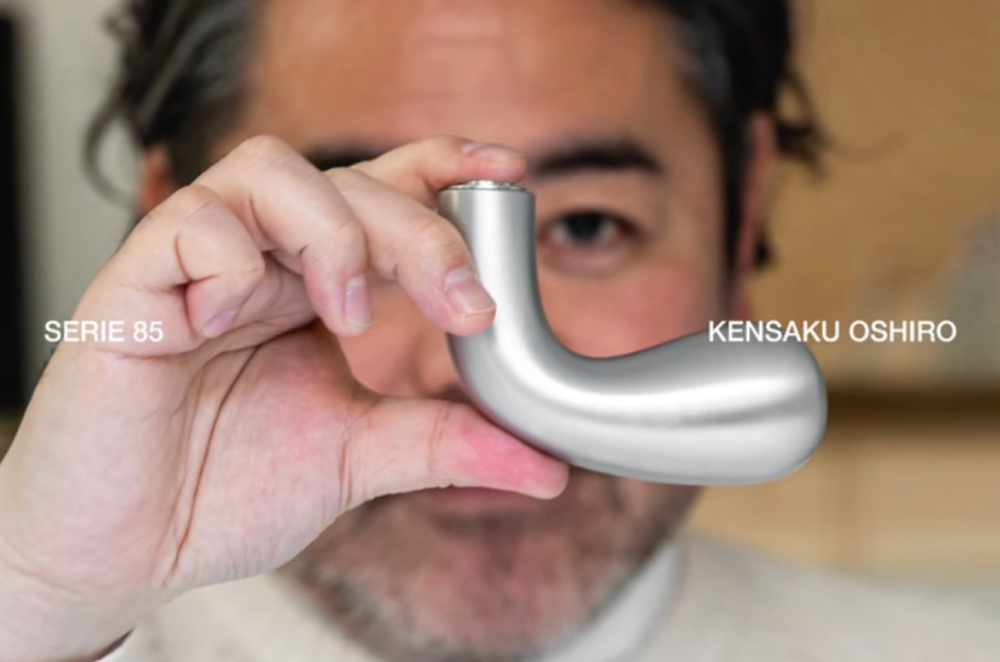
The year 2026 is big for Verum; we are opening the collection to many other designers. At Fuorisalone 2026, during Milan Design Week, we will introduce three new models. One is by Kensaku Oshiro, a renowned Japanese industrial designer living here in Italy; another is by Brian Sironi, a younger Italian designer who was awarded the prestigious Compass d’Oro in 2011 for his Elica LED lamp, and the third is by Victorio Grassi, who is an architect with a different approach to design.
Designers started calling us, suggesting that we are doing something well: we are presenting the product, company, and brand properly. The hard thing is to say ”wait”, because we cannot make everything in one shot. Design is increasingly coming to focus for us, but I can’t stress enough that our target is to provide an exceptional technical solution for unique design applications.
So not only Italian designers, but also designers who share the values that Italian design and technology represent.
Absolutely. For example, look at Kensaku Oshiro. He is helping us understand the design sensibility of the Japanese market, and perhaps, in the near future, we will be able to deliberately develop a collection with a taste or sensibility originating in another part of the world. But I have to admit that when something is beautiful, it is beautiful everywhere. There can be different accents, finishes, or colors, but beauty knows no borders.
Today, our most popular finishes are matte black and satin chrome. But to be an innovative company, an opinion leader, and stay relevant, we must take some risks. But luckily, our partners are just as crazy as we are. When our team at Verum starts developing a new design or material innovation, our partners understand why we are doing it and share our desire to make a difference. It may take a while for the market to notice, like with our earlier Verum Grey Moon finish, but it’s worth it.
Blue Cenote emerged from our collaboration with Studio Klass, another Milanese industrial design studio we enjoy working with. We suggested they explore glossy finishes, specifically because they are not in vogue. But not in fashion also means it's a good moment to push for innovation. This color and name—Blue Cenote—come from the Cenote Azul water-filled sinkholes in Mexico. They change color as the light changes throughout the day — in midday, you may see pure light blue, but when it’s cloudy, the color turns a little bit gray and darker. So this was the concept and the source of inspiration for the name.

The second new finish is Ghiza Grey, which is a very dark color. We call it Ghisa, which is Italian for cast iron. We wanted to give it a tactile feel that doesn’t feel flat. If you close your eyes and touch the product, you really understand the material; it's not just a molded product. This finish, this color is really an extension of our standard Etna Black.

The third finish we just launched is Venezia Gold, in response to demand in some of our markets for more precious materials and warmer finishes. We have developed expertise in durable painted finishes, so Venezia Gold is a painted color with a smooth satin finish. We call it Venezia Gold because the inspiration came from the golden details on Venetian furniture, stucco, and picture frames. A gold-painted frame enhances the painting's value. There is always some logic.

Originally, we sold through distributors and door producers, but this limited our visibility into the projects and customer feedback. We wanted to support specifiers, interior designers, and architects as best we could. In our new showroom in Milano, we are finally able to talk to them directly. We can share all our knowledge and ethos about what we do and why. We have seen that it's providing real value not only to us but also to them, and helps inform their choices.
I see architects and Verum as partners. Our role is to help them navigate product finishes and core material selections and understand the cost implications. The constraints of each project are quite unique; it’s never just the handle.

There are many, but one of the most recent commercial projects made me really happy. It was a school where we supplied about two hundred Verum Snapp lever handles, a new handle we produce from recycled ocean materials. The architect decided to use Snapp because he likes it and has seen it work perfectly. It was also important for him to underline the choice of recycled materials — he wanted to teach the kids that things can be done differently right from the moment they enter the classroom. So it's not just a handle, it's a handle with a reason. An everyday object executed with purpose and clever design. And we come back to our tagline: “Fighting for Beauty.”


